Synopsis
In the aftermath of 9/11, Michael and Mary inherit an old Delaware farmhouse that has belonged to Michael’s family for generations. Standing in the home of relatives he barely knew, Michael confronts what it means to be the final surviving bearer of his family name (“Last Mann Standing”). He is convinced that some force has brought them there; Mary believes that love matters more than any divine plan (“The Human Condition”).
Inside the house, they find rooms crowded with forgotten belongings: photographs, handmade quilts, and a reproduction of Michelangelo’s Delphic Sibyl. The painting reminds Mary of a mysterious rhyme her mother sang to her as a child (“The Sybil’s Rhyme”). When Michael opens an old family trunk, its contents awaken memories he cannot explain (“Here Before”). Following an instinct he does not understand, he discovers a hidden passage behind the fireplace and is drawn into the lives of those who inhabited the farmhouse before him.
The story moves backward to Easter 1987, when five-year-old Michael visits the house with his parents. His grandmother Hariette welcomes him as a long-awaited blessing, while the family’s competing hopes for the child expose the divisions already forming around him (“Michael Angelo”). Hariette longs for a peaceful reunion between her sons, but years of resentment between Lucas and his older brother, David, quickly resurface. Hariette’s work on quilts for the AIDS Memorial ignites a confrontation over race, sexuality, faith, and who is considered worthy of love (“The Last Supper”). After the family’s fragile bonds are torn apart, Hariette returns to her sewing and holds fast to the possibility that love and acceptance can still create change (“Great Good”).
In 1932, a young Hariette prepares to marry Marcus, a federal Prohibition agent, while the women of the local temperance society sew a quilt and condemn the moral failings of those who drink (“The Drunkard’s Path”). Their certainty forces Hariette to confront the memory of her beloved brother Abraham, who returned from the First World War paralyzed, traumatized, and dependent on alcohol. With the help of her mother, Joan, she begins to understand that a human life cannot be judged by what is visible on its surface (“Inside Abraham”).
The journey continues to 1918, as war reaches into the farmhouse and reshapes the family forever. Abraham attempts to describe the horror he witnessed in France (“The Battle of the Marne”), while Joan mourns the young men who will never return (“Fallen Stars”). Her uncle, John, questions why history elevates some men as heroes while leaving the courage and suffering of others unseen (“Just a Man”). His memories carry the musical still farther into the past—to 1863, when he and his mother, Agnes, used their home as a station on the Underground Railroad.
There, they shelter Mae, an enslaved woman fleeing north with her infant daughter. Mae carries a stolen painting of the Delphic Sibyl and a history of violence she has risked everything to escape. As slave catchers and their hounds close in, everyone in the farmhouse must confront the difference between righteousness and genuine courage (“The Hunt”). Mae reveals that the woman in the painting has guided her journey through the same prophetic song Mary will inherit generations later.
John and Mae imagine another time in which the world might allow them to love one another freely (“One Hundred Years”). When Mae must continue north, John faces the choice that will define his life: remain safely inside the world he knows or follow what he believes to be right (“My Moment”). His decision reveals the deepest secret preserved within the farmhouse—and connects Michael and Mary to a past neither of them could have imagined.
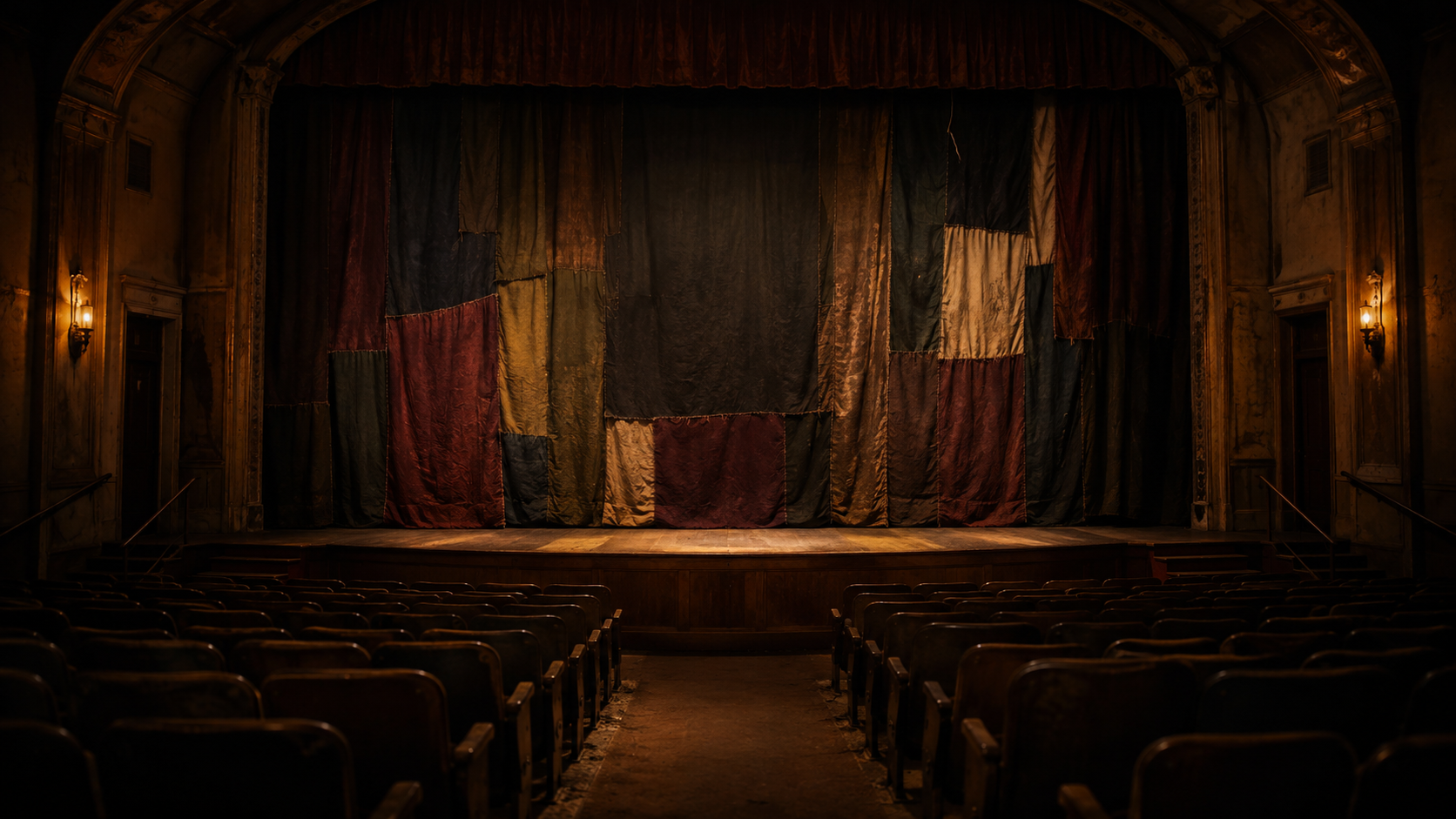
When the story returns to the present, Michael and Mary see their own love reflected in the generations that preceded them (“The Human Condition — Reprise”). Michael understands that the house is more than an inheritance. Its rooms and quilts hold a family history shaped by love and prejudice, courage and failure, suffering and survival. Like a patchwork quilt, those imperfect fragments have been preserved and joined together—not to erase their divisions, but to create something greater from what remains (“Patchwork”).